
Dr. Shiva Kakkar
PhD IIM-Ahmedabad · Ex-faculty, XLRI · Head of Product, Rehearsal AI
Your team finished that 'GenAI for Business course' but nothing changed? Then you are at the right place.
I train leaders and managers on Gen AI Adoption and Strategy. Not Prompt-Engineering. Transformation.
Featured on:


Trusted by top teams from:


By The Numbers
Impact over 3 years
2,000+
Managers Trained
60+
Organizations
3,600+
Rehearsal AI Users
400+
IRS Officers (CBDT)
In the media...
AI Won't Take Your Job. Laziness Will.
Roles governed by SOPs with zero accountability will vanish. Future belongs to high-accountability positions.

Critical Reading and Writing with AI
Featured instructor on OpenAI's official Academy platform

Vice President AI - Jaipuria Group
Jaipuria Institute of Management announces Dr. Shiva Kakkar's appointment

AI for Government Services
Talk on transforming how citizens connect with government using AI
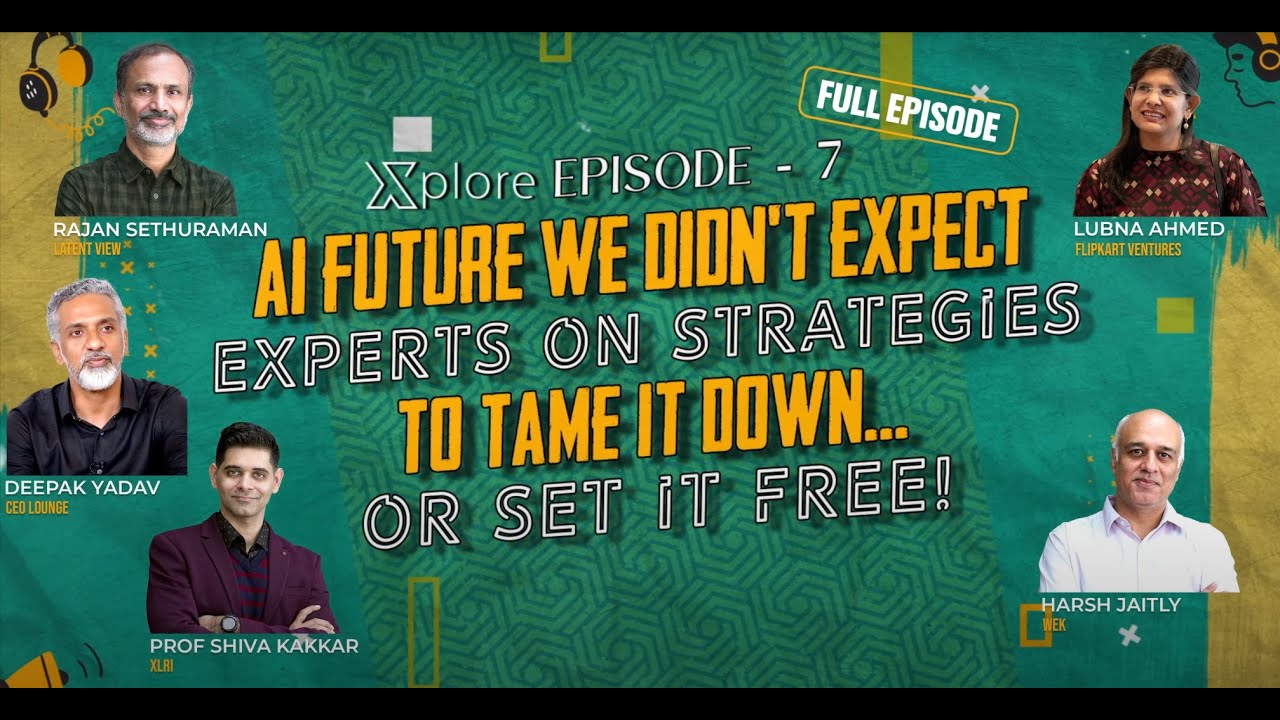
GenAI for Business Leaders
In-depth discussion on AI adoption strategies
Hi, I'm Shiva Kakkar
I'm a faculty-turned-entrepreneur with a PhD from IIM-Ahmedabad and full time teaching stints at XLRI Jamshedpur and IIM, Nagpur. I founded Rehearsal, an AI interview prep platform that's helped 3,600+ users land their dream jobs.
I've trained 2,000+ managers at organizations like HDFC Bank, Infosys, Multiplier, CBDT and others. Many of my Management Development Programmes run in collaboration with top b-schools like XLRI (Jamshedpur and Delhi), various IIMs, Ahmedabad University, Jaipuria Institute of Management, etc.
You hear GenAI can transform organizations. But where do you start?
The problem isn't the tech — it's finding function-specific use cases and implementation frameworks that actually work.
Latest Writing
All Readings-
Your Expertise Is Now a Liability. Here's Why the Intern Outperforms You with AI.
-
The People Deciding India's AI Future Won't Spend ₹400 on It.
-
Why That ₹4 Lakh IIM Course Won't Make You AI-Ready? - II
I write about what actually works
No hype, no prompt tricks — practical learnings and insights from my own experience implementing GenAI. Join 1500+ Readers.
For program inquiries, click here or mail to: shivak@iima.ac.in
AI Adoption: What You're Not Being Told
Why do most AI transformations fail despite successful pilots?
Research identifies five critical patterns in failed AI transformations: treating AI as a pure technology play, pursuing isolated pilots without integration plans, underestimating organizational change requirements, failing to measure real business impact, and ignoring the adoption gap. 48% of leaders cite employee resistance as their top automation risk. The Google diabetic retinopathy AI is a stark example—90% accuracy in the lab, complete failure in deployment because doctors wouldn't use it.
What's the difference between feasibility risk and adoption risk?
Feasibility risk asks 'Can we build it?' Adoption risk asks 'Will people use it?' Most organizations obsess over feasibility (technical specs, pilot accuracy) while ignoring adoption (workflow integration, user motivation). Dashboard adoption has been stuck at 30% since the early 2000s—not because dashboards don't work, but because employees don't use them. Adoption risk is why your AI project succeeds in the lab but fails in production.
What motivates versus demotivates employees to adopt AI?
Six motivators drive adoption: feeling AI augments rather than replaces them, seeing clear workflow improvements, having autonomy over tool usage, receiving proper training, experiencing quick wins, and seeing leadership use the same tools. Four demotivators kill adoption: forced implementation without consultation, unclear ROI on their time investment, systems that create more work than they save, and fear of job displacement. Organizations that address demotivators first see 3x higher adoption rates.
How much should we budget for AI adoption versus development?
Research recommends at minimum a 1:1 ratio—for every ₹1 spent on AI development, spend ₹1+ on adoption infrastructure. This includes workflow redesign, change management, training, incentive restructuring, and measurement systems. Organizations that maintain the old 90% dev / 10% training split see pilot success rates of 15-20%. Those who flip to 50/50 or adoption-heavy budgets see real deployment success rates above 60%.